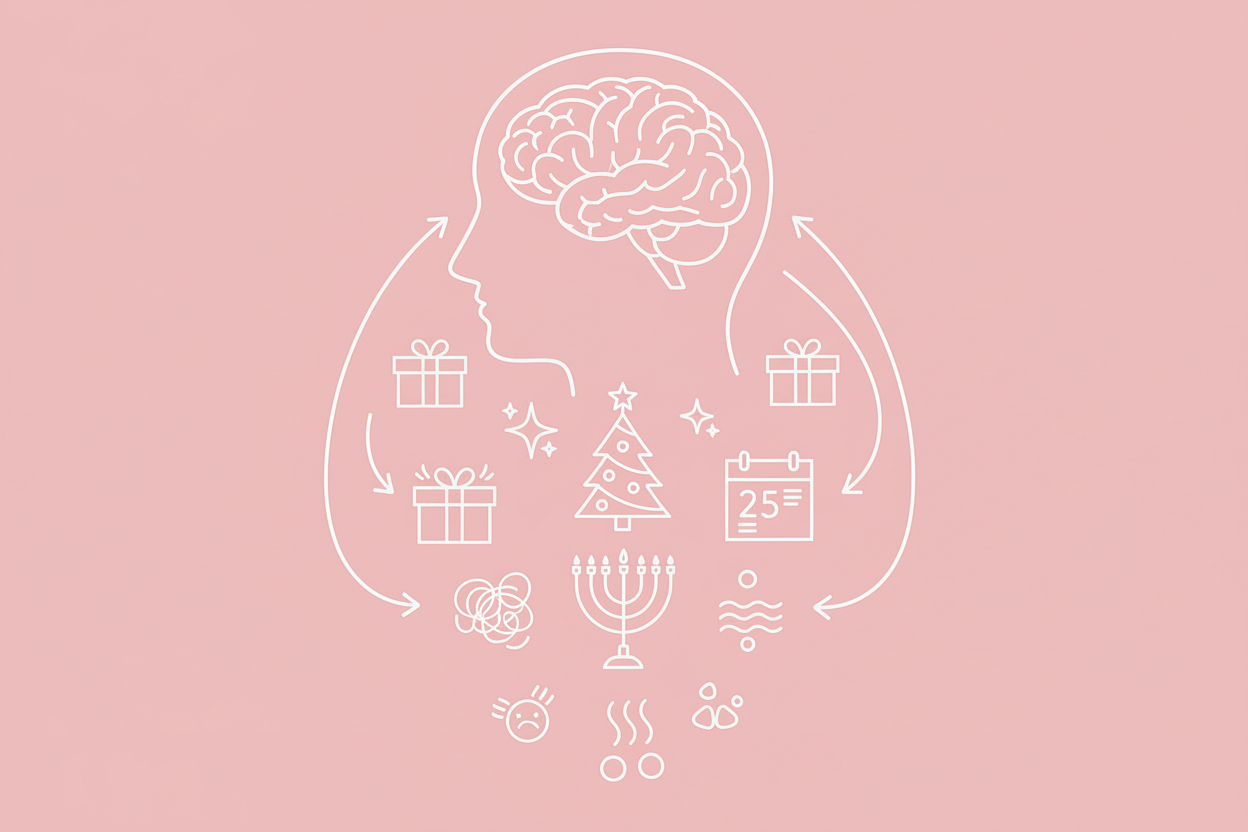
For many people, chronic pain doesn’t just show up randomly—especially during the holidays. In fact, it can present quite predictably — almost like it has a calendar invite. It ramps up when a specific date is approaching, when a particular song plays, when a familiar smell hits, right before a family gathering, or in the days leading up to a big holiday. By the time the season rolls around, your nervous system can feel a little like this:
Those triggers have nothing to do with your body, yet your body feels different. Your brain generates pain in response to perceived danger, which is influenced by factors such as learning, memory, meaning-making, predictions, and your emotional state. It continuously connects sensations, emotions, people, places, and specific dates to assess how safe you are, creating a narrative that informs its judgment. When your brain predicts a threat, regardless of its nature, it activates an alarm to warn and protect you. This alarm can manifest as anxiety or, in some cases, as physical pain.
Pain is influenced not only by sensory input, such as tissues or posture, but also by several other factors:
- Memory: What was happening in your life when your symptoms were at their worst, or what was it like when your pain first came on?
- Context: Who you are with, what activity you are doing, where you are, the weather, and the time of day or year can all play a role.
- Meaning: What you are doing, the significance of it, and how the symptoms impact you and your identity can affect your experience of pain.
- Prediction: Anticipating threat, whether physical or psychological, can enhance your experience of pain.
- Emotional State: Your current feelings and mood can impact how you perceive pain.
Why Pain Can Go Up or Down During the Holidays
During the holidays, your threat detection system and alarms can become particularly intense, especially if your brain associates the holidays with danger. You may sense a threat if you associate the holidays with financial stress, increased familial obligation, childhood/family trauma, loneliness, grief, or if you simply have high expectations and put a lot of pressure on yourself to make the holiday perfect.
Also, if a previous pain flare happened around the holidays during a particularly stressful or lonely season, your brain can quietly learn:
“This time of year = danger. We must protect.”
That protection can show up as:
- A spike in pain intensity leading up to events
- Extra fatigue, headaches, stomach aches, or tightness
- Strong urges to cancel plans, brace, or shut down
- Anxiety, depression, or panic
You might notice:
- Pain is worse around certain traditions, family dynamics, grief anniversaries, or financial stress.
- Pain is actually lighter during moments of genuine connection, laughter, or when you feel more like yourself or have a moment to yourself.
None of this means you’re imagining your symptoms. The brain’s primary goal is survival, and to do so efficiently, it needs to create shortcuts. Sometimes it may even feel like your brain is doing its job too well when it begins treating dates, songs, places, or people like threat cues.
These are conditioned responses: when your brain reacts to triggers unrelated to your body, your nervous system can still flip into alarm mode. From a PRT perspective, this makes sense:
- When your brain senses threat (conflict, pressure, loneliness, old memories), it’s more likely to turn up the pain signal to keep you on guard.
- When it senses safety (warmth, support, being seen, doing something meaningful), it may turn down the signal, even if nothing in your body has physically changed.
Regardless of how your pain behaves (with more or less intensity), take a moment to recognize that if it does change based on the time of year, you have a strong piece of evidence that the pain is likely caused by or amplified by your brain and not by physical damage to the body. This is one of the clearest clues that chronic pain during the holidays is neuroplastic and not a sign that your body is “broken.”
PRT Research: Holiday Stress and Pain
A 2023 survey by the American Psychological Association found that 89% of US adults feel stressed during the holiday season, with 41% reporting higher stress levels compared to other times of the year. Stress is known to exacerbate pain levels and can even lead to novel symptoms. For many individuals, the emotional toll of the holidays stemming from time pressures, financial strains, social comparison, and family gatherings can lead to heightened anxiety and depression, both of which are closely linked to amplified pain perception.
Additionally, the National Alliance on Mental Illness points out that 64% of individuals with mental health disorders report a worsening of their conditions during the holidays. The interplay of emotional distress and physical pain means that many may find themselves caught in a cycle where stress amplifies pain, and pain exacerbates stress, creating a challenging environment during what is typically viewed as a joyful time of year.
Ultimately, understanding this connection can help in developing strategies to cope with both chronic pain and holiday-related stress, ensuring better overall well-being during the season.
References:
- American Psychological Association. (2023, November 30). Even a joyous holiday season can cause stress for most Americans [Press release].
https://www.apa.org/news/press/releases/2023/11/holiday-season-stress - National Alliance on Mental Illness. (2014, November 19). Mental health and the holiday blues [Press release].
https://www.nami.org/press-releases/mental-health-and-the-holiday-blues/
Suggestions for Calming Your Nervous System During the Holidays
Set Realistic Expectations
Accept that the holidays may not be picture perfect. Recognize that you don’t need to force yourself to be happy, that you can allow a range of emotions, and that you don’t need to pressure yourself to meet unrealistic ideals.
Understand Triggers and Prepare
Preparing yourself by understanding how and why different triggers affect you during the holidays can help reduce stress and navigate them when they arise.
Monitor Substance Use
Avoid numbing or avoiding feelings by overusing alcohol or other substances, which can worsen anxiety and depression.
Practice Mindfulness
Engage in mindfulness exercises such as meditation, deep breathing, or yoga. These practices can help ground you and reduce anxiety.
Create a Routine
Establishing a daily routine can provide a sense of stability and predictability, helping to ease feelings of chaos that can arise during the holiday season.
Limit Overcommitment
Be selective about the events and gatherings you choose to attend. It’s perfectly okay to decline invitations that may cause stress or overwhelm. If gift-giving adds to your stress, determine a comfortable spending limit and stick to it. If buying gifts for everyone feels challenging, consider organizing a Secret Santa or White Elephant exchange to minimize the number of gifts each person needs to buy.
Prioritize Self-Care
Make time for yourself amidst the holiday hustle. This can include taking quiet walks, reading a book, or enjoying a favorite hobby.
Stay Connected
Reach out to friends and family who uplift you or feel similarly to you. Schedule time for meaningful conversations or activities with those who provide support and understanding.
Create New Traditions
Consider starting new, low-pressure traditions that focus on connection and enjoyment rather than obligation.
Seek Support
If you’re feeling particularly stressed or overwhelmed, consider talking to a therapist or counselor who can provide guidance and support.
Implementing these strategies can help create a calmer holiday experience, allowing for more moments of connection and joy and reducing feelings of anxiety and pain.
Coping Skill Spotlight: Humming and Rocking for Fibromyalgia Relief
In our ongoing effort to share effective coping strategies from our community, we want to highlight a powerful technique shared by Kamila Święs: humming and rocking.
These two simple activities engage the vagus nerve, promoting a calming effect that can ease pain, fatigue, and sleep disturbances. Here’s how they work:
Humming
This soothing practice can be done anywhere, even during a flare-up. Just 3–5 minutes of humming can significantly promote relaxation by encouraging a longer exhale, which helps to calm the nervous system.
Rocking
Gentle, rhythmic rocking can induce a sense of tranquility and stability. You don’t need to spend more than 5 minutes on this, and you can easily integrate it into your daily routine.
Clients report that combining both techniques into a brief 5-minute “hum and rock” session is especially effective. Incorporating this practice into your evening ritual may help enhance your sleep quality, making it a gentle yet impactful way to wind down for the night—especially helpful if chronic pain during the holidays tends to spike in the evenings.
Share a Coping Skill
Have a clinician-tested strategy that teaches safety and is easily adaptable?
Send us a brief note with: what it is, when to use it, and why it helps the brain.
We’ll feature selected submissions in future issues. Just write
info@painreprocessingtherapy.com
with the subject line Coping Skill Spotlight.