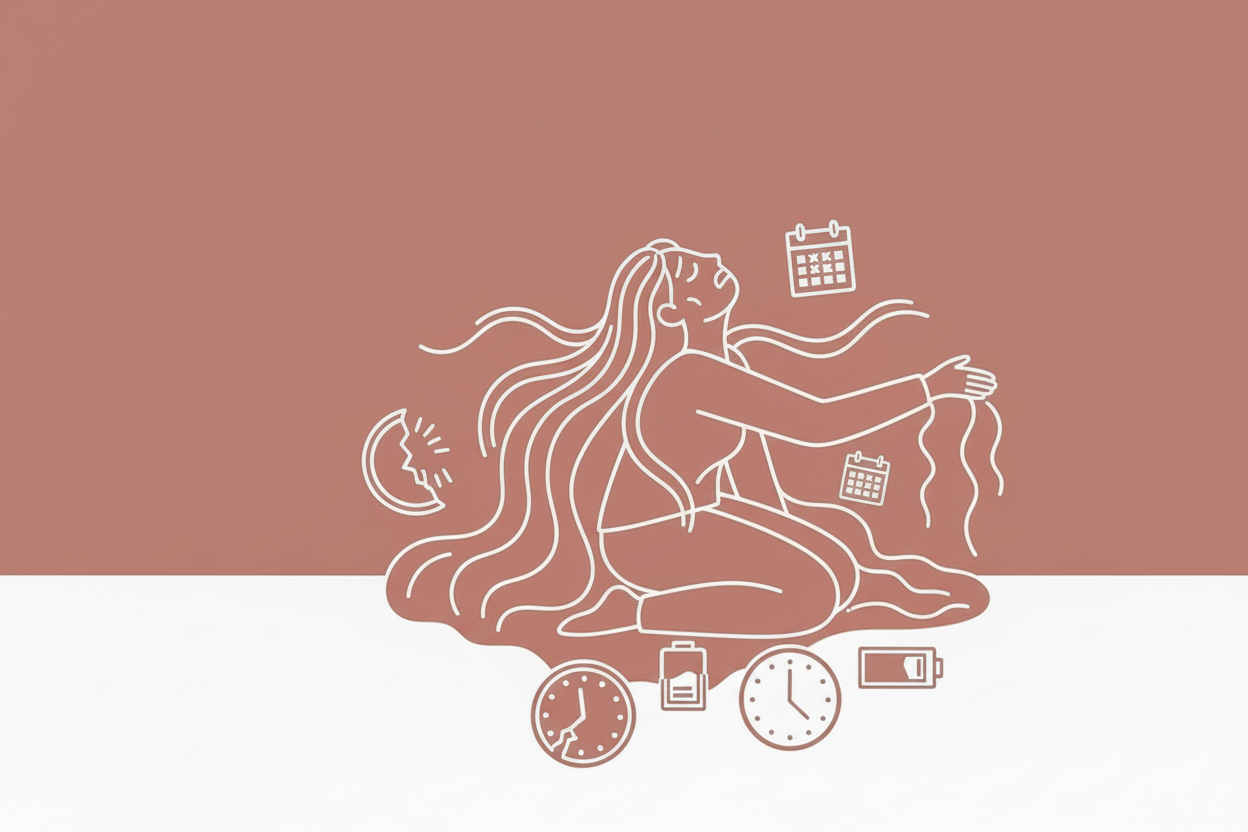
Just like pain and anxiety, fatigue is a danger signal. Fatigue serves as a warning that the body needs rest and recovery. But sometimes the brain generates fatigue when the body does not actually need to rest and recover — a faulty alarm signal, just like any other neuroplastic symptom.
When most people say “I’m tired,” they mean they need a good night’s sleep. Their body needs rest to recharge and survive. Once they get the rest they need, they wake up refreshed and symptom-free.
But if you live with chronic fatigue, you know it’s not that simple. This kind of exhaustion can be body-deep and life-altering — affecting your work, relationships, identity, and sense of what’s possible. You cannot just nap the fatigue away.
For some, fatigue builds slowly over years of pain, stress, or health issues. For others, it begins after an illness and never fully lets go. For many people, this includes what’s often called post-viral fatigue or long COVID. However it starts, the message it sends can feel the same. Like something is very wrong, and typically with a lot of fear, anxiety, and uncertainty about whether they will ever feel better.
The good news is that pain recovery therapies like pain reprocessing therapy (PRT) can help turn off faulty signals in the brain to decrease or even eliminate fatigue, just as with other neuroplastic symptoms.
Chronic Fatigue: Harmful and Helpful
If you’re experiencing chronic fatigue, it’s completely understandable that you want relief and a return to the life you once knew. It’s essential to recognize that all signals from your body are there to protect you in some way. Instead of solely focusing on how these signals have caused harm, let’s take a moment to explore what they might be protecting you from.
Consider reflecting on how your fatigue may have shaped your experiences. Has it gently encouraged you to take necessary breaks? Has it opened the door for you to set boundaries, helping you say no to commitments that felt overwhelming? It may have offered you a chance to lighten the burdens you’ve placed on yourself or that others have placed on you.
Imagine for a moment what your life would look like if your symptoms magically vanished. While the idea may bring joy, it’s also normal to feel a range of other emotions. Embracing this complexity can be helpful and provide you with some important insight.
Taking the time to understand your symptoms — what triggers them and what you might be avoiding — can serve as a powerful motivator for positive change. This journey could lead you to establish healthier boundaries in both your personal and professional life or to practice self-care more compassionately throughout your day.
Journal Prompt: Exploring My Chronic Fatigue
Reflect on your experiences with chronic fatigue. If you don’t experience fatigue, feel free to journal about whatever symptoms you have. Consider the following questions as you write:
- What has your fatigue taught you about your limits and needs?
- In what ways has it encouraged you to prioritize self-care or set boundaries?
- How do you feel when you imagine a life without this fatigue? What emotions arise?
- Can you identify specific triggers for your symptoms? What might they be protecting you from?
- What small changes (unrelated to your symptoms or symptom recovery) can you make to honor your body’s signals, care for yourself, and promote change?
Take your time, and allow your thoughts to flow freely.
Coping Skill Spotlight: Let It Be from Dominic Knowles
Observe symptoms just like you would clouds floating by in the sky above. Letting go in this way can be challenging, but can make all the difference in coming back to a regulated state. Tune into sensations without fear or judgement, letting the anxiety and control pass. Trying to hang onto symptoms or direct them in a specific way can increase intensity and preoccupation, which may only heighten sensations.
When it comes to chronic fatigue, find the fatigue in your body. Is it a pressure behind your eyes, a heaviness in your arms, a weakness in your legs? Find it and simply allow it to be there. Sink into it rather than fighting it. If it is weighing you down, you might imagine falling deep into the bed or couch, so deep that you sink through to the floor.
Although it may sound simple, this skill is not one to overlook!
Share a Coping Skill
Have a clinician-tested strategy that teaches safety and is easily adaptable?
Send us a brief note with: what it is, when to use it, and why it helps the brain.
We’ll feature selected submissions in future issues. Just write info@painreprocessingtherapy.com with the subject line Coping Skill Spotlight.
PRT Research: Harnessing Neuroplasticity for Chronic Fatigue Recovery
Recent work on ME/CFS and long COVID suggests these conditions are rooted in reversible dysregulation of the nervous, immune, gut, and hormonal systems — not in permanent damage. This view comes from psychoneuroimmunology research (linking stress, inflammation, and gut changes to symptoms) and from studies showing that people often improve when they’re given a coherent, science-based explanation of their illness and a sense of self-agency, rather than being told “nothing is wrong” or “nothing can be done.”
Symptoms like fatigue, pain, and brain fog can be neuroplastic: real, but maintained by a hypersensitive brain–body alarm system stuck in “danger mode.” To help reverse this, let’s highlight three steps:
- Making sense of symptoms in a way that says “dysregulated, not broken.”
- Changing the response to symptoms from fear to curiosity and safety (as instructed in modalities like PRT).
- Gradually reintroducing activities in small, tolerable steps so the brain can update its predictions and learn, “this is uncomfortable, but it’s safe.”
References:
- Bakken, A. K., Mengshoel, A. M., Synnes, O., & Strand, E. B. (2023). Acquiring a new understanding of illness and agency: a narrative study of recovering from chronic fatigue syndrome. International Journal of Qualitative Studies on Health and Well-being, 18(1), 2223420.
- Barrett, L. F. (2017). How Emotions Are Made: The Secret Life of the Brain. Pan Macmillan.
- Clark, A. (2024). The Experience Machine: How Our Minds Predict and Shape Reality. Random House.
PRT Podcast: Episode 10
If you’d like to hear these ideas applied in real time, our latest PRT Podcast episode explores chronic fatigue through a live session.
Therapist John Gasienica and guest Raelan Agle, a social worker who recovered from a decade of ME/CFS and now supports patients with chronic fatigue and long COVID, walk through a session with “Rachel,” whose life changed after severe fatigue and brain fog reshaped her days.
You’ll hear:
- How beliefs like “my body is broken” can keep the nervous system on high alert
- A guided emotional regulation exercise you can follow along with
- Raelan’s reflections from her own recovery and the stories of many others
- How a shift from rumination to healthy anger can loosen the “monster” feeling of fatigue
- A helpful framework for belief in recovery
👉 Listen to Episode 10 of the PRT Podcast with John & Raelan — Season Finale!
Reading Corner
Finding Freedom: Escaping from the Prison of Chronic Fatigue Syndrome by Raelan Agle
Finding Freedom infuses chronic fatigue sufferers with hope. Raelan wants readers to know that real recovery from this illness is possible. She reveals a treatment process that harnesses the body’s innate ability to heal, provides strategies for working proactively with your doctor, and lays out a maintainable healing plan.
After recovering herself, Raelan knows there is a better way, and now works to inspire patients to get their happiness back. She talks about adopting healthy habits, balancing rest and activity, and building a supportive community around you. If you are suffering from fatigue and feel lost about where to start, this book provides hope and structure to an otherwise complex and confusing diagnosis.